Curious why so many buyers fall for a DC rowhouse, then spend the next week asking smarter questions about alleys, porches, basements, and permits? That instinct is exactly right. In Washington, DC, rowhouse living is about much more than a pretty brick front. It is about how the house fits the block, how the space has changed over time, and what that means for daily life and long-term ownership. If you are thinking about buying or selling one, this guide will help you understand what it is really like to live in a DC rowhouse. Let’s dive in.
DC rowhouses are not all the same
A Washington rowhouse is typically an attached home with two shared side walls and a private ground-level entrance. An end row usually shares only one wall, which can affect light, windows, and the overall feel inside.
That said, the biggest mistake is treating all DC rowhouses like one product category. The District has 70 historic districts, including more than 30 neighborhood historic districts, and the DC Inventory of Historic Sites includes more than 23,600 protected buildings. In practice, that means your experience can change a lot from one block to the next.
Some neighborhoods are known for ornate late-Victorian rows with more decorative facades and vertical layouts. Others are defined by porch-fronted brick houses from the early 1900s that often feel wider, brighter, and a little more practical in day-to-day use.
For example, preservation records describe Dupont Circle rowhouses with styles like Queen Anne and Richardsonian Romanesque. Capitol Hill shows a broad mix that includes Queen Anne, Romanesque Revival, Classical Revival, and Colonial Revival. Petworth is closely associated with the porch-fronted brick Washington rowhouse, and Woodley Park guidance highlights repeating porches, front greensward, rear alleys, and a strong block rhythm.
The block shapes the lifestyle
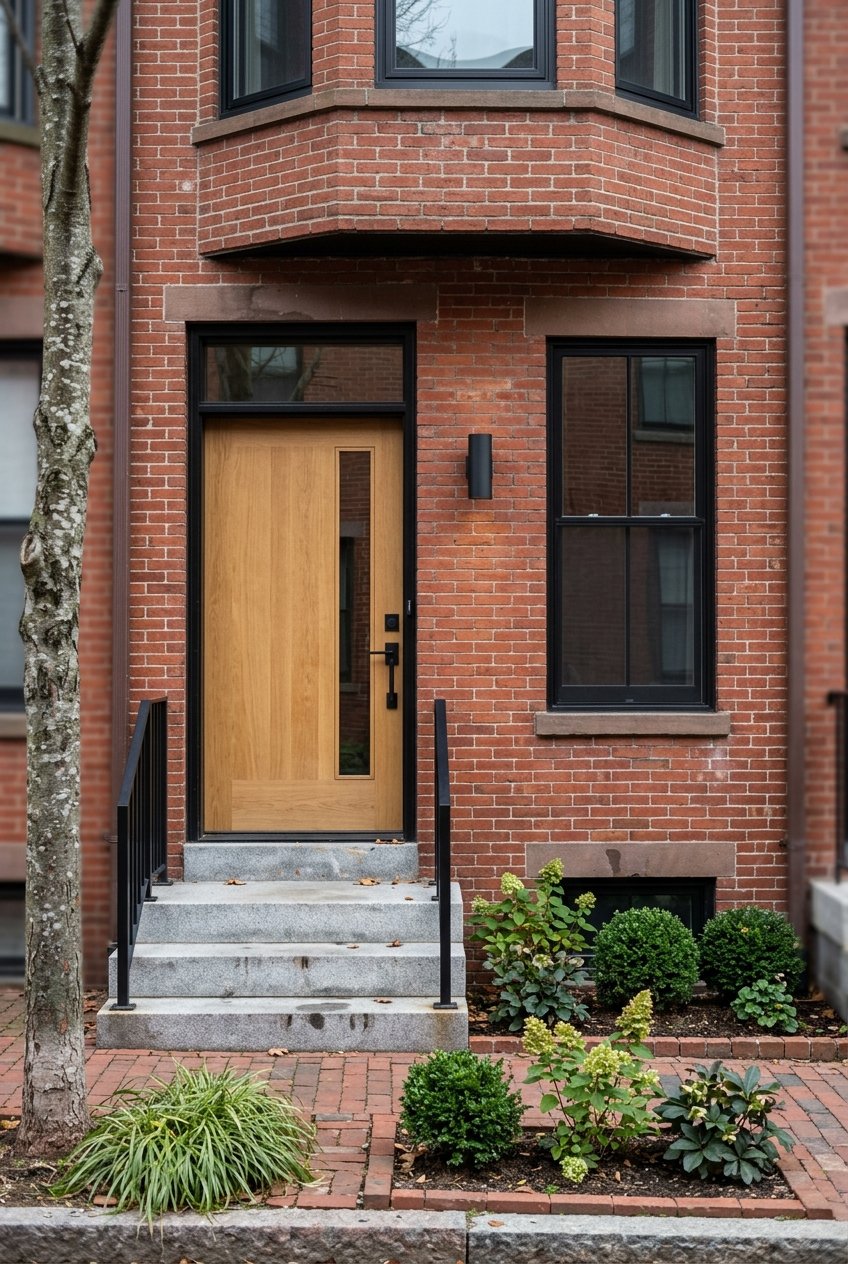
In DC, rowhouse living is often as much about the block as the home itself. Many rowhouse streets are defined by stoops, porches, consistent setbacks, and a repeating facade pattern that gives the street a clear identity.
That strong street edge affects how the neighborhood feels when you walk outside. Front porches and steps are not just visual details. City preservation guidance treats them as character-defining features, which tells you how central they are to the look and experience of many rowhouse blocks.
This is one reason buyers often respond to a rowhouse emotionally before they can explain why. You are not only choosing square footage or finish level. You are choosing a house that belongs to a visible pattern on the street.
From a practical standpoint, that also means what you can change is often tied to what the block already established. In many DC neighborhoods, especially historic districts, the visible front side of the property tends to be the most protected and the least flexible.
Older ornate rows feel different inside
Late-19th-century rowhouses often feel more vertical and decorative. Preservation documents describing examples in neighborhoods like Dupont Circle note features such as turrets, irregular massing, cut-brick corners, heavy masonry, large round-arched entrances, and elaborate ornament.
Inside, that architectural style can translate into a more segmented layout and a stronger sense of the home’s original era. Even when renovated, these houses often carry a clear historic character in the proportions, stair placement, and facade design.
For buyers, this can be a real advantage if you value detail and presence. It can also mean you should look closely at how updates were handled, especially where original exterior features, windows, porches, or rooflines are concerned.
For sellers, it helps to understand that buyers are often evaluating both aesthetics and stewardship. A rowhouse with original visible features maintained thoughtfully may tell a stronger story than one with changes that feel out of sync with the building.
Porch-front rowhouses often feel brighter
Early-20th-century Washington rowhouses are often easier for buyers to live with day to day. The porch-fronted brick type, sometimes called the Washington rowhouse or daylight type, was typically built wider than many Victorian houses so it could have more windows in exposed walls.
That design shift matters in real life. More width and more windows can make these homes feel lighter and less compressed, especially compared with older, narrower houses.
Preservation guidance also describes these homes as commonly featuring brick facades, porches, dormers, pent roofs, and entry doors with a high proportion of glass. On many blocks, that creates a streetscape that feels open and consistent without being overly formal.
If you are comparing neighborhoods, this is an important distinction. Two rowhouses may have similar square footage on paper but live very differently depending on era, width, porch design, and window placement.
Front is formal, rear is flexible
One of the best ways to understand DC rowhouse living is this: the front of the house is usually the public face, and the rear is where adaptation happens. That pattern shows up again and again in DC preservation and design guidance.
City guidance generally discourages front additions because they cover or alter the character-defining facade. By contrast, the most common addition type on Washington’s historic rowhouses is the rear addition.
In fact, many rear additions started as open or screened porches, sometimes called sleeping porches, that were later enclosed to create more interior living space. That is why a rowhouse may feel historically formal from the street but much more updated or expanded once you move toward the back.
This matters whether you are buying or selling. If a home has an expanded kitchen, family room, or additional finished space at the rear, it may be part of the house’s long pattern of adaptation. The key question is not just whether it exists, but how well it was done and how it fits the property.
Outdoor space works differently here
If you are moving from a detached home, the outdoor pattern of a DC rowhouse may take some adjustment. The front yard often plays a visual role more than a private one.
In rowhouse historic districts, front greensward, porches, and low open fences are often part of the block’s character. Rear yards, patios, decks, and enclosures usually provide the more private outdoor experience.
That means your best everyday exterior living space may be behind the house rather than in front of it. For many owners, the backyard, deck, or patio becomes the true outdoor room.
This setup can be a great fit if you want a compact urban lifestyle with usable outdoor space that is easier to maintain. It also means you should look beyond curb appeal alone and pay attention to how the rear exterior actually functions.
Alley access changes daily life
Alley access is a major part of rowhouse living in many DC neighborhoods. It is not an afterthought. The city has specifically surveyed alley buildings in historic rowhouse areas because these neighborhoods contain large numbers of alley dwellings, carriage houses, stables, warehouses, and garages.
For buyers, that history matters because parking, trash access, garage use, and rear entry often depend on the alley. In many rowhouse historic districts, front-yard driveways are generally not permitted, and parking or garages are usually located in the rear yard next to an alley.
So when you tour a rowhouse, it helps to ask practical questions early:
- Is parking on the street, in the rear, or both?
- Does the rear alley provide direct vehicle access?
- Is there an existing garage or parking pad?
- How visible are rear additions or exterior features from the alley?
This is where local knowledge really matters. Two houses on nearby blocks can offer very different parking and access experiences even if the front facades look similar.
Renovation potential comes with rules
Rowhouses can offer strong renovation appeal, but in DC, exterior work is often shaped by permits and preservation review. The city states that most construction requires a permit, and exterior work affecting a historic property requires historic preservation review.
The city specifically identifies work such as additions, decks, fences, and window replacement as permit-related. If a property sits in a historic district or is otherwise protected, those rules can shape timelines, design choices, and costs.
This does not mean rowhouses are impossible to improve. It means you need a realistic plan. Exterior flexibility is usually greater at the rear and more limited at the front, especially when visible features define the building’s character.
That is one reason a developer-aware lens is so useful in DC. You want to know not just what looks updated, but what was likely straightforward, what may have required review, and what future changes could be more constrained.
Original details still matter
DC preservation guidance puts special weight on roofs, windows, porches, and additions because these elements shape both performance and appearance. The city also emphasizes repair over replacement when it is economically and technically feasible.
For owners, that has a direct impact on maintenance decisions. A window is not only about efficiency. A porch is not only about curb appeal. These are highly visible components that affect how the property is perceived and, in many cases, how it can be altered.
For buyers, this is where surface-level renovations can be misleading. A sleek kitchen may catch your eye, but the lasting ownership story often sits in the facade, roofline, porch condition, window quality, basement configuration, and rear addition.
For sellers, this is also why pre-listing strategy matters. Buyers in DC often notice the visible character-defining features first, especially on a rowhouse, and those elements can shape the entire showing experience.
Basements and upper levels vary a lot
One of the most important questions in any DC rowhouse is how the extra space actually works. Preservation guidance notes the recurring condition of raised basements or English basements in these homes, and that can be a major part of the home’s usable area.
But basement space is not one-size-fits-all. Some basements function as integrated living space. Others feel more secondary, more compartmentalized, or more limited in light and layout.
Upper levels can vary just as much. A roof level, dormer, or roof deck may add utility, but city guidance generally says rooftop equipment and roof decks should be hidden from public view or set back behind the cornice when visible conditions apply.
In other words, the square footage number does not tell the full story. When you evaluate a rowhouse, it helps to look closely at where the most livable space is, how natural light moves through the house, and whether the rear or lower levels have been adapted in a functional way.
What buyers and sellers should pay attention to
If you are buying a DC rowhouse, focus on more than finishes. Look at the relationship between the house and the block, the era of the home, alley access, the condition of visible exterior elements, and whether the rear of the home has been expanded thoughtfully.
If you are selling, remember that buyers are often reading both lifestyle and asset value at once. They notice block rhythm, facade condition, porch presence, windows, roofline, and how the home balances historic character with modern usability.
A smart evaluation usually includes questions like these:
- Is the home in a historic district?
- Is there a preservation easement affecting alterations?
- Which exterior changes may need permits or preservation review?
- Is parking street-based, alley-based, or both?
- How much of the basement or rear addition feels truly usable?
Those details are often what separate a rowhouse that simply photographs well from one that works well over time.
Why rowhouse living appeals to so many people
What makes DC rowhouses so compelling is the mix of history, density, personality, and adaptability. You get a home that participates in the life of the street, while often keeping its most flexible and private spaces at the rear.
That balance is hard to replicate. A rowhouse can feel urban and connected from the front, then surprisingly personal and functional once you move through the interior and out to the back.
It is also why good advice matters. In DC, you are rarely choosing just a house. You are choosing a building era, a block pattern, a preservation context, and a version of city living that can be very specific from one neighborhood to the next.
If you want help evaluating a rowhouse with a sharper eye for layout, renovation quality, and long-term value, Julie Weigel Fletcher offers strategic guidance grounded in real DC property experience.
FAQs
What is a Washington, DC rowhouse?
- A DC rowhouse is typically an attached home with two shared side walls and its own ground-level entrance, while an end row usually shares only one wall.
How does living in a DC rowhouse differ by neighborhood?
- The experience can vary significantly because DC rowhouses span different architectural eras and many neighborhoods have their own historic district context and design guidance.
Are parking options common with Washington, DC rowhouses?
- Parking may be on the street, in the rear yard, or accessed from an alley, and in many rowhouse historic districts front-yard driveways are generally not permitted.
Do exterior changes to a DC rowhouse need permits?
- Most construction in DC requires a permit, and exterior work affecting a historic property may also require historic preservation review.
What parts of a DC rowhouse are often original versus later updated?
- Front facades, porches, windows, and rooflines are often the most character-defining elements, while rear additions frequently reflect later changes or enclosed porch space.
Are rear additions common on Washington, DC rowhouses?
- Yes, rear additions are the most common addition type on historic Washington rowhouses, and many began as open or screened rear porches that were later enclosed.
How important is the basement in a DC rowhouse?
- Very important, because many rowhouses have raised basements or English basements that can add usable space, though layout, light, and functionality vary widely from home to home.
How can you tell if a DC rowhouse has renovation constraints?
- A good starting point is to find out whether the property is in a historic district or subject to a preservation easement, since those conditions can affect alteration options.