If you feel priced out of Arlington at first glance, you are not alone. It is an expensive market, but that does not mean every opportunity is gone, especially if you know how to spot a condo or townhome with real improvement potential. The key is learning how to separate cosmetic upside from costly surprises so you can buy with more confidence. Let’s dive in.
Why value-add still matters in Arlington
Arlington remains a competitive market with a median sale price of $815,000 in Redfin’s March 2026 snapshot. Homes were selling in about 31 days on average, with roughly three offers per property. That kind of pace can make buyers feel like there is no room to create value, but selective opportunities still exist.
Condos and townhomes sit at very different price points. Separate Redfin listing snapshots showed about 249 condos for sale at a median listing price of $400,000 and about 60 townhouses for sale at a median listing price of $635,000. For many buyers, that means older condos are still the more accessible starting point, while townhomes usually require a higher budget.
Arlington County’s own housing research adds important context. The County reports a 43.9% homeownership rate and says condos account for 99% of all sales up to $500,000. It also notes that existing condos are the most likely source of affordable ownership opportunities, which is one reason under-improved units can still be worth a close look.
What value-add really means
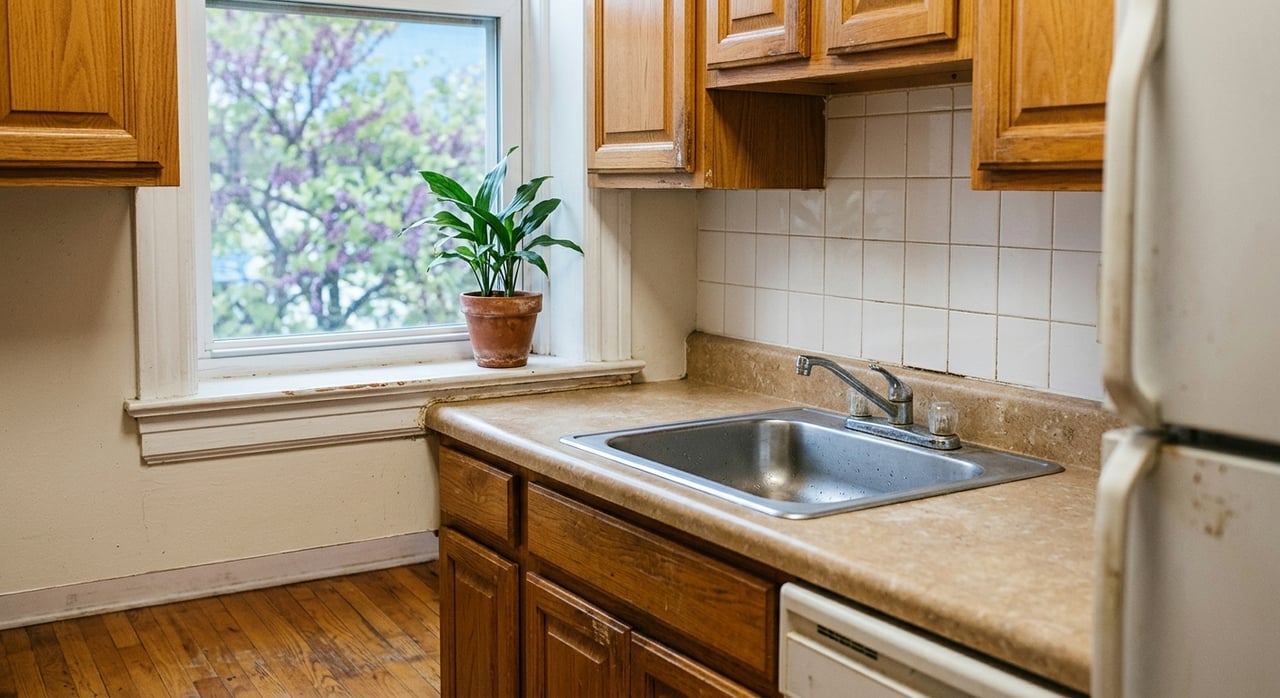
In Arlington condos and townhomes, value-add usually means cosmetic improvement in a strong location, not a major overhaul with unknown costs. The best opportunities are often units that look dated but function well. Think older cabinets, worn finishes, tired paint, or appliances that are past their prime but still in standard locations.
Arlington County says no permit is required if you are replacing kitchen or bath cabinets, appliances, or fixtures in the exact same location without moving pipes or drywall. That matters because straightforward updates are usually easier to budget, easier to approve, and easier to complete. In practical terms, the safer play is often buying a home with bad style, not bad bones.
Julie Fletcher’s developer-informed perspective is especially useful here. When you evaluate a property through both a buyer lens and a renovation lens, you can better judge whether you are paying for potential or stepping into a money pit.
Arlington locations where upside may hold better
Rosslyn-Ballston corridor
The Rosslyn-Ballston corridor remains one of Arlington’s clearest examples of location-driven demand. Arlington County describes this area as a classic smart-growth corridor, with the highest density concentrated within about a quarter-mile of Metro stations in Rosslyn, Courthouse, Clarendon, Virginia Square, and Ballston.
For buyers, that creates a simple value-add logic. If a condo or townhome is well located near these transit-connected nodes but has dated interiors, the location may help support resale appeal after thoughtful updates. You are not creating demand from scratch. You are improving a property within an area that already has strong market attention.
National Landing
National Landing is another area worth watching closely. Arlington describes it as a highly connected mixed-use community spanning Crystal City, Pentagon City, and Potomac Yard, with four Metro stations, nearly 20 urban parks, and about 30,000 residents.
County planning materials also describe Crystal City and Pentagon City as areas being transformed with more housing options, better retail, and improved public spaces. For a buyer, that means an older condo or townhome in this broader area may offer upside if the renovation scope is manageable and the building fundamentals are sound.
Columbia Pike
Columbia Pike can appeal to buyers who want a more value-oriented entry point. Arlington County calls it Arlington’s Main Street and notes recent reconstruction and transit-station improvements along the corridor.
The County also expects a large share of future population and employment growth along Columbia Pike over the next 30 years. That long-term investment story makes older condos and townhomes here worth attention, especially when the improvements needed are mostly cosmetic rather than structural.
Shirlington
Shirlington stands out for buyers who are open to townhouse communities as well as condos. Arlington describes the area as including several townhouse communities, high-rise apartments, restaurants, trails, and bus access to D.C., Crystal City, the Pentagon, and National Airport.
That mix can support buyer demand even when a home’s interior feels behind the times. In other words, a dated townhouse in a well-used, well-connected area may present a different kind of opportunity than a polished home in a less compelling location.
How to spot the better opportunities
The best value-add homes often share a few traits:
- Strong location near transit, jobs, or established mixed-use corridors
- Outdated finishes rather than damaged systems
- A layout that works without moving walls or plumbing
- A building or community with a clearer maintenance plan
- Renovation rules that are manageable for the scope you want
When you tour homes, focus on what is expensive to change versus what is mostly visual. Paint, cabinet fronts, hardware, light fixtures, and flooring can change how a place feels. Structural movement, moisture issues, and major building deficiencies can change your budget very quickly.
Red flags that can erase the upside
Not every “needs work” listing is a smart buy. Some homes look like cosmetic projects but hide larger building or system issues that can wipe out your margin and add stress.
Water intrusion is one of the biggest warning signs. Research cited in the report ties water intrusion to structural damage, poor installation, and degrading materials. If you see staining, bubbling paint, musty smells, or signs of recurring leaks, it is worth slowing down and asking tougher questions.
Cracks also need context. HUD notes that settlement cracks can be common in older homes, but deterioration or unclear severity deserves more serious review. If a condition is hard to interpret, bringing in a structural engineer may be the smart move.
Older properties may also require extra care around lead and asbestos. HUD warns that deteriorated lead-based paint can become hazardous as it breaks down into dust and chips, and Arlington County requires an Asbestos Inspection and Awareness Form for alterations or additions to existing structures. That does not automatically make a property a bad fit, but it does mean your renovation budget should include professional guidance when needed.
Why the condo documents matter so much
In Arlington, the resale packet can be just as important as the kitchen. If you are buying a condo or townhome in a common-interest community, the association documents can tell you whether a project is realistically executable.
Virginia’s Resale Disclosure Act gives buyers a three-day cancellation window after receipt of the resale certificate if the contract does not specify another period. If the resale certificate has not been delivered, a buyer may cancel any time before settlement. That makes timing and review critical.
The bigger issue is what the documents reveal. Arlington County’s Condominium Initiative highlights budgets, insurance, water damage, repair needs, governance, and resale disclosure as major areas of concern. Before you count on upside, review dues history, reserve funding, major repair plans, and any signs that rising capital costs could affect future ownership costs.
Renovation plans need a realistic approval path
A good idea on paper is not enough. In a condo or townhome setting, your renovation also has to fit association rules, local permit requirements, and Virginia contractor rules.
Virginia DPOR says the Board for Contractors licenses businesses doing construction, repair, or improvement work, and state law requires a contractor license for most contracting work or bids over $1,000. DPOR also advises consumers to verify licenses, get written estimates and contracts, limit deposits, and avoid paying the full amount up front.
In Arlington, many residential projects move through Permit Arlington. Exterior work, additions, decks, roof work, window wells, and some historic-district changes can trigger permits or additional approvals. That is why the easiest value-add opportunities are often the ones where the work stays simple, interior, and well within the rules.
A smart framework for evaluating value-add
If you are comparing Arlington condos and townhomes with renovation potential, this checklist can help keep your thinking grounded:
1. Start with location strength
Ask whether the property sits in an area supported by transit access, job centers, or long-term public investment. In Arlington, corridor-based demand matters. A dated home in a strong location may have more durable upside than a prettier home in a weaker one.
2. Separate cosmetic from structural
Look closely at what needs to change. New finishes can be manageable. Moisture damage, major cracks, failing systems, or building-wide issues are a different category entirely.
3. Review the association early
Read the resale certificate and supporting documents carefully. Look for reserve strength, planned assessments, insurance concerns, maintenance history, and any renovation restrictions that could affect your plans.
4. Match the project to the rules
Make sure your intended improvements fit County requirements and any community guidelines. If your vision depends on approvals that are uncertain, your timeline and costs may shift quickly.
5. Build in a margin for the unknown
Even strong projects can have surprises. If the numbers only work under perfect conditions, the opportunity may not be as attractive as it first appears.
The bottom line on Arlington value-add
Arlington can still reward buyers who know where to look and how to evaluate risk. Existing condos remain an important ownership entry point, and older townhomes in well-connected areas can also present opportunity when the location is strong and the renovation scope is controlled.
The best candidates are usually not dramatic fixer-uppers. They are well-located homes with dated finishes, solid fundamentals, and a clear path through association review, contractor selection, and local rules. If you want to think beyond surface finishes and make a more strategic move, working with someone who understands both value and construction can make a real difference.
If you are considering a condo or townhome with upside in Arlington, Julie Weigel Fletcher can help you evaluate the numbers, the renovation potential, and the hidden risks before you move forward.
FAQs
What does value-add mean for Arlington condos and townhomes?
- In Arlington, value-add usually means buying a well-located condo or townhome with outdated finishes and improving it through manageable updates rather than major structural work.
Which Arlington areas may offer better condo or townhome upside?
- Areas backed by transit access and public investment, including the Rosslyn-Ballston corridor, National Landing, Columbia Pike, and Shirlington, may better support demand after updates.
Why should Arlington condo buyers read the resale packet carefully?
- The resale packet can reveal dues history, reserves, insurance issues, repair plans, and renovation restrictions that may affect whether a value-add purchase makes financial sense.
What are common red flags in older Arlington condos and townhomes?
- Warning signs include water intrusion, unresolved cracks, signs of deterioration, and renovation issues that may involve lead, asbestos, or larger building problems.
Do Arlington cosmetic renovations always need permits?
- Not always. Arlington County says replacing kitchen or bath cabinets, appliances, or fixtures in the same location without moving pipes or drywall typically does not require a permit.
How can you judge whether a dated Arlington home is worth improving?
- Focus on location strength, building condition, association health, approval requirements, and whether the needed work is mainly cosmetic rather than structural.